
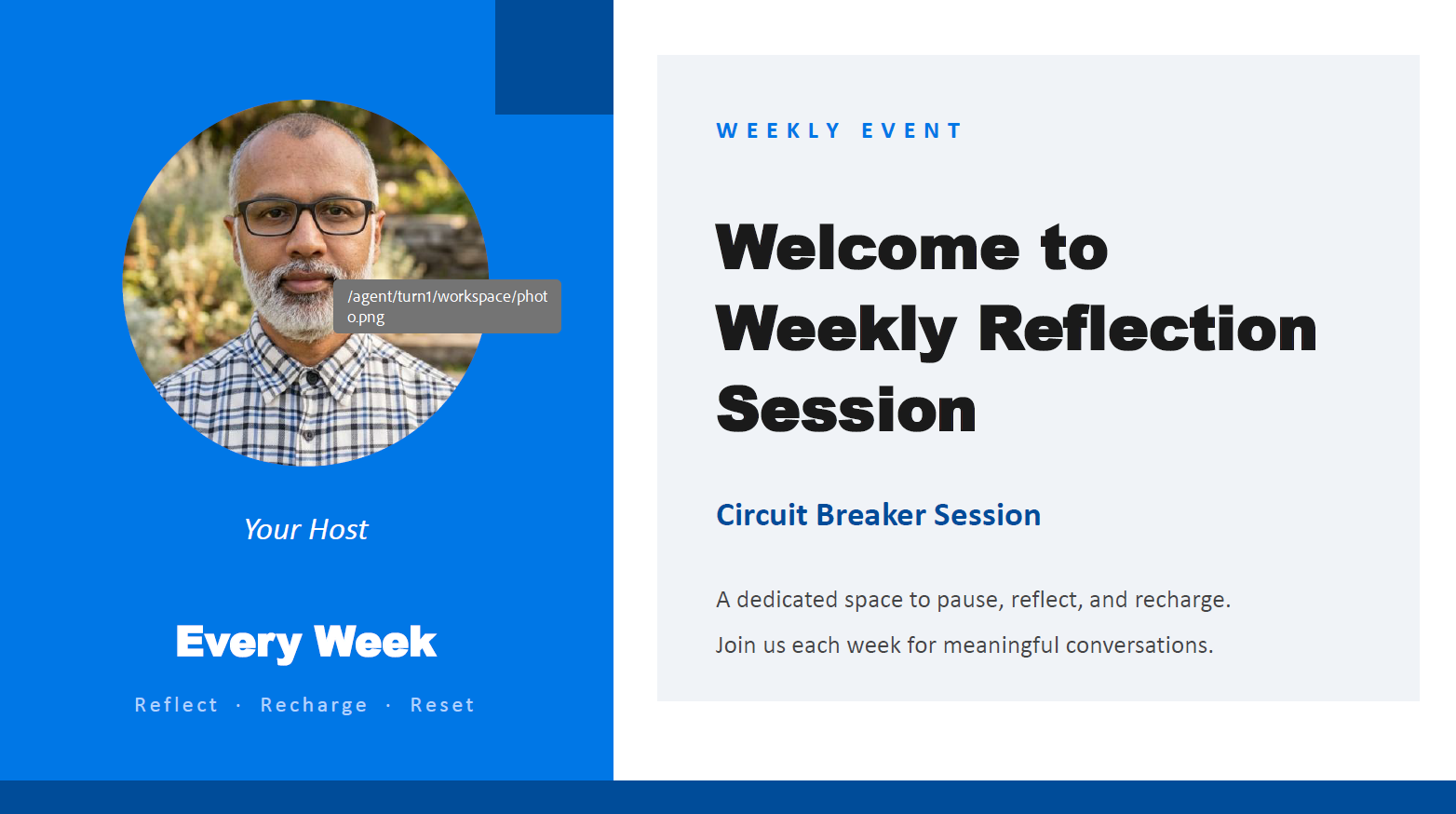
This week's reflection.
Befriending Your Inner Landscape: The Art of Compassionate Presence
We often treat our inner lives like a problem to be solved. When tension rises, a critical thought appears, or anxiety begins to hum in the background, our immediate instinct is usually to "fix" it. We want to analyze it, dismiss it, or push it away so we can get back to feeling "normal."
But what if, instead of struggling to resolve these internal states, we learned to simply sit with them?
By combining the physical anchor of the breath with a compassionate inner stance, you can transform your relationship with your internal parts. This isn't about ignoring your discomfort; it’s about creating a safe container where every part of you is allowed to exist without the pressure to perform or change.
1. Recognize and Anchor
The key to navigating internal turbulence is catching it early. As soon as you notice tension building—whether it’s a tight chest, a racing thought, or a shift in mood—label it briefly, then gently redirect your attention to your breath.
The breath is your stabilizer. It doesn't require you to have an opinion on your tension; it simply anchors you in the present moment, reducing the tendency to react impulsively to whatever you are feeling.
2. Breathe with Compassion
Breathing is inherently grounding, but you can deepen this practice by intentionally "breathing in" compassion. As you inhale, imagine that you are bringing softness and warmth into your internal space. As you exhale, imagine you are opening up room for your parts to simply be present. You aren't trying to change the parts; you are simply making space for them to exist alongside your awareness.
3. Let Go of the Need to Fix
One of the most radical things you can do for your mental well-being is to remove the expectation of resolution. When a difficult emotion or a critical part arises, resist the urge to debate, analyze, or suppress it.
Hold the stance of "here-and-now" certainty: you are present, you are breathing, and this part is here too. By letting go of the pressure to resolve, you signal to your system that it is safe to just be.
4. Welcome the "Fixers"
Inevitably, parts of you will arise that demand a solution. You may feel a strong compulsion to find certainty or a desire to shut down the experience.
Acknowledge these parts, too. Instead of fighting them, say to yourself: "I see that you are trying to find a solution because you want to feel safe. Thank you for trying to help." By acknowledging these parts with compassion rather than debating them, you prevent the cycle of reactivity from spiraling further.
5. Create a Safe Harbor for Expression
When you hold a truly nonjudgmental, receptive space, you may find that deeper, more difficult material emerges—perhaps feelings of criticism, anger, or fear. This is actually a sign of progress.
When your system feels heard and safe, it will express what it has been holding onto. Your role is not to agree with the content of these thoughts, but to hold the space for them to be heard. This radical listening stance is the fastest path to genuine integration.
6. The Cycle of Return
This is not a one-time exercise, but a practice of return. After acknowledging a part, intentionally bring your focus back to the rhythm of your breath. Reconnect with that core of compassion, and allow yourself to integrate the experience.
If the tension returns, simply begin again. Repeat the cycle as often as needed to maintain your equilibrium.
A Final Thought
You do not need to be different, fixed, or "better" to be worthy of compassion. By choosing to coexist with your internal parts rather than battling them, you reclaim your ability to be the calm center of your own experience.
Today, try to notice one moment of internal tension. Instead of fixing it, can you simply breathe, notice, and allow it to be there for just a few moments?