
Beyond the Stereotype: Understanding the Surge in Neurodiversity Among Women and Children
Introduction
For generations, the narrative surrounding neurodiversity—conditions such as autism, ADHD, and related profiles—has been remarkably narrow. For a long time, it was widely misunderstood as a condition that primarily affected boys. Classic diagnostic criteria were built around hyperactive, disruptive behaviors most frequently observed in young males, leaving countless girls, women, and quiet children completely off the radar.
Fortunately, awareness is shifting. We are now seeing a powerful and long-overdue surge in diagnoses among women and girls. But this rise isn't a sudden medical trend; it is the correction of a historic oversight.
Why Women and Girls Were Overlooked for So Long
The historical neglect of neurodiverse women largely comes down to masking and internal presentation.
While a neurodiverse boy might struggle to sit still in a classroom, a neurodiverse girl often learns to study social cues meticulously, mimicking her peers to fit in—a process known as social masking. She might channel her internal chaos into perfectionism, anxiety, or daydreaming. Her struggles are internal: sensory overload, emotional exhaustion from pretending to be neurotypical, and the quiet weight of feeling like she is constantly failing at a game where she wasn't given the rulebook.
Because these traits do not disrupt the classroom or the workplace in obvious ways, they are frequently mislabeled as anxiety, depression, or simply "personality quirks." Many women spend decades feeling deeply misunderstood, exhausted, and isolated before finally discovering an explanation that fits.
The Relief of Recognition
Receiving a late diagnosis in adulthood can bring a complex mix of emotions. There is often profound grief for the years spent struggling without answers or support. But far more powerfully, there is an immense sense of validation.
Understanding that your brain simply processes the world differently transforms self-criticism into self-compassion. It reframes past struggles not as personal failures, but as the natural result of navigating a world not built for your neurological wiring.
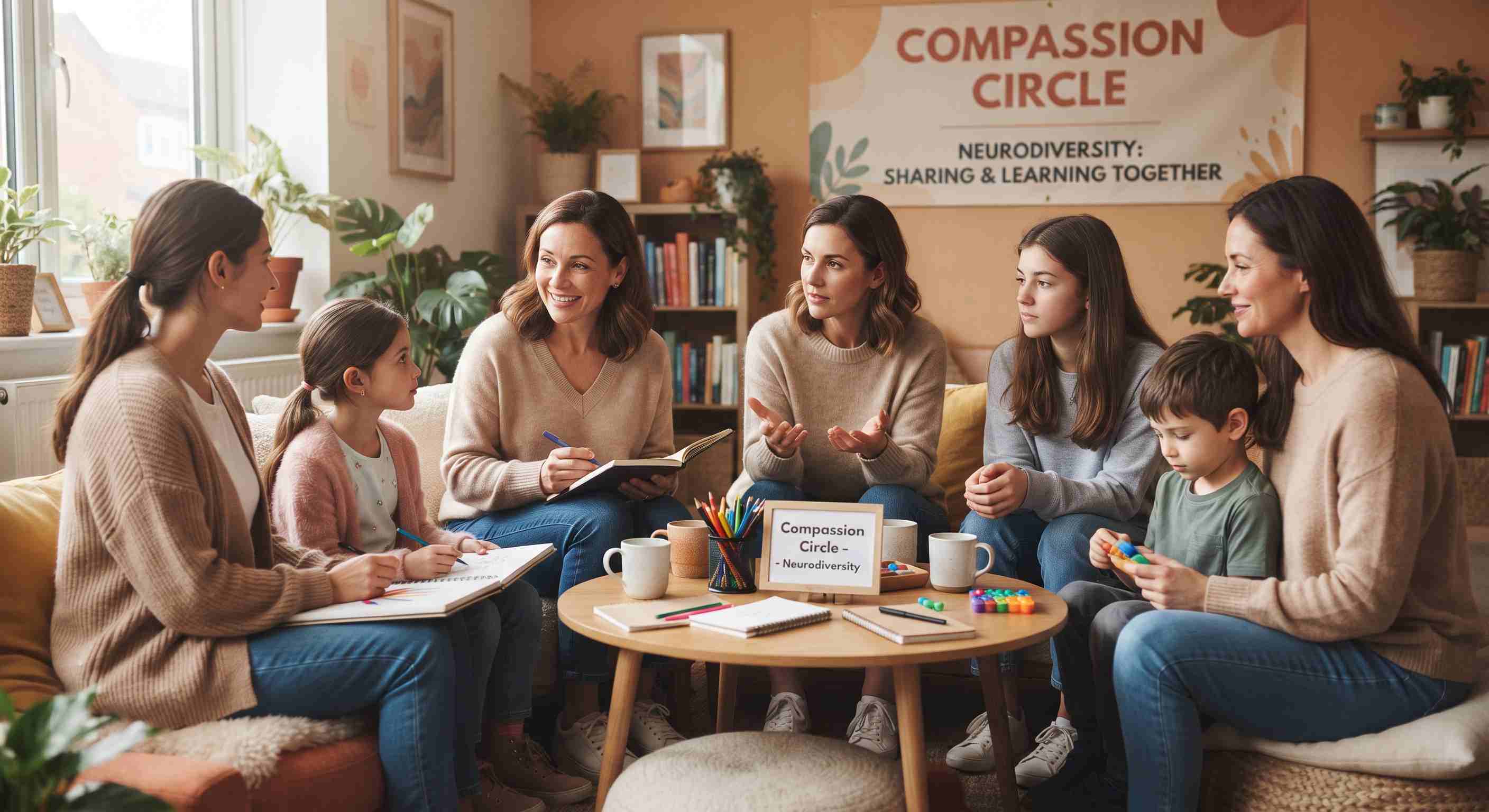
Finding Your Space: The Compassion Circle Community
Healing, understanding, and thriving do not happen in isolation. They happen when we share our stories, validate one another’s experiences, and build spaces rooted in genuine empathy and presence.
Within our Compassion Circle community, we have created a dedicated, safe space specifically for discussing neurodiversity. Whether you are navigating a recent diagnosis, supporting a neurodiverse child, exploring your own identity, or simply looking to learn from the lived experiences of others, you do not have to walk this path alone.
Here, you can:
- Share openly without fear of judgment or misunderstanding.
- Learn practical strategies from others who truly "get it."
- Connect with a supportive community dedicated to presence, personal growth, and mutual care.
If you are looking for a place where your unique experience is understood and valued, we invite you to join the conversation and connect with us in the Compassion Circle. Together, we can move beyond the stereotypes and embrace the full spectrum of human diversity.